

In 2026, standard SEO is no longer just about appearing in the blue links.
It is about Generative Engine Optimization (GEO). Your content needs to be structured so that AI Overviews can cite you as a primary source.
The plugins we use have changed to meet this demand. They no longer just “check boxes” for keywords. They now act as translators between your content and large language models like Gemini and GPT-5.
I only include 5 SEO plugins so that you can easily decide. They all come in a free version as well.
Quick Comparison: The Top 5 SEO Plugins at a Glance

| Plugin Name | Best For | Standout AI Feature | Performance Rating | Free Version | Starting Price |
|---|---|---|---|---|---|
| Rank Math | Advanced Users | Content AI & 18+ Schema Types | A (Lightweight) | Available | $7.99/mo |
| Yoast SEO | Beginners | AI Metadata & Readability | B- (Heavy) | Available | $9.90/mo |
| AIOSEO | Local Businesses | AI Link Assistant & Local Schema | B (Medium) | Available | $20.83/mo |
| The SEO Framework | Speed Junkies | Automated “No-Bloat” Logic | A+ (Instant) | Available | $7/mo |
| SEOPress | Agencies | White-labeling & GA4 Integration | A- (Fast) | Available | $4.8/mo |
Table of Contents
1. RankMath SEO Plugin:
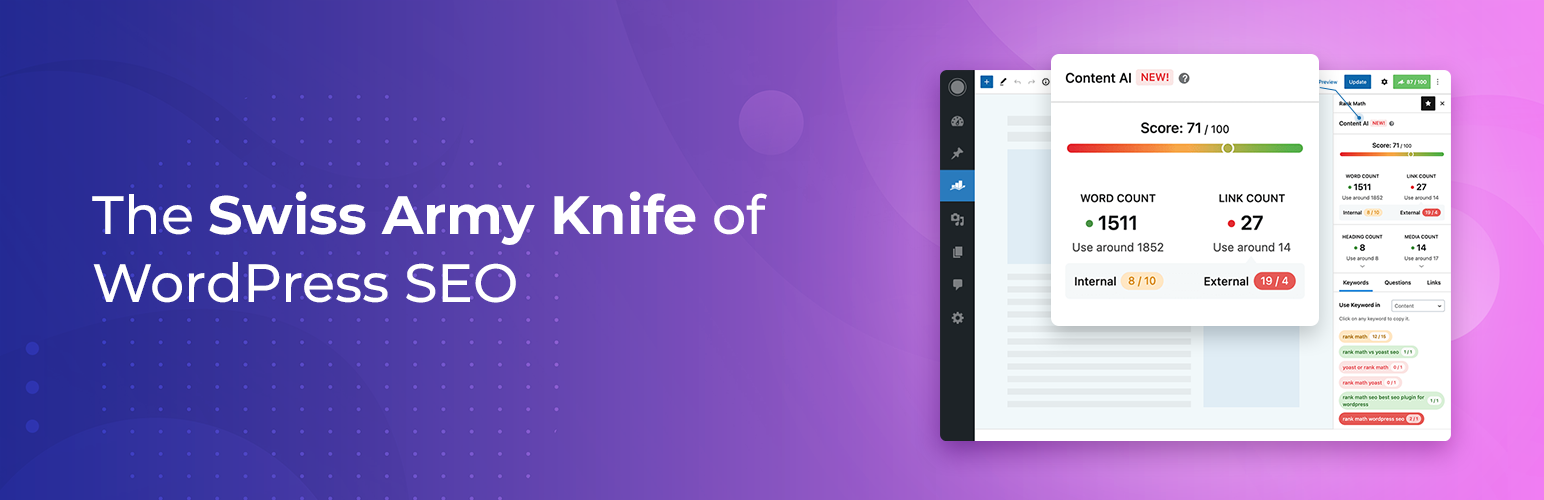
If you handle several sites or just want a tool that does the heavy lifting for you, Rank Math is the one to beat.
When I first loaded it onto our test site, I noticed the modular setup.
You can toggle off the features you don’t need. This is great because it keeps your dashboard from looking like a cluttered cockpit.
It basically replaces four or five other plugins. It handles your redirects, your schema, and even monitors your 404 errors.
When I first loaded it onto our test site, I noticed the modular setup.
You can toggle off the features you don’t need.
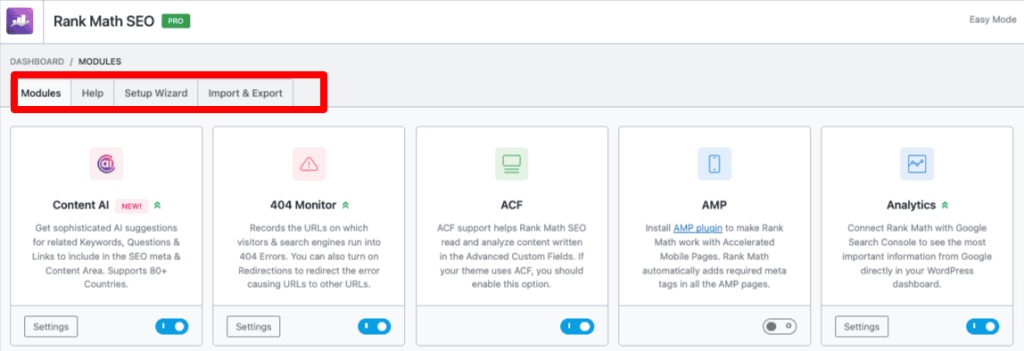
This is great because it keeps your dashboard from looking like a cluttered cockpit. It basically replaces four or five other plugins. It handles your redirects, your schema, and even monitors your 404 errors.
Most plugins give you the basics. They tell Google, “Hey, this is an article.” Rank Math goes a lot deeper. It has a built-in Schema Generator with over 18 types.
Example: I used their FAQ and How-To blocks on a tutorial page last month. It worked. Within a few days, that page was taking up a massive amount of space on mobile search results because of those rich snippets.
| Pros | Cons |
| The Google Search Console integration is a lifesaver. You can see your actual rankings without leaving WordPress. | It can feel overwhelming for beginners because it offers too many features. |
| If you’re switching from Yoast, the migration tool is very reliable. | The AI credits can run out quickly if you are publishing every day. |
Read: Rank Math SEO Plugin Review (Complete Details)
2. Yoast SEO: The Classic One
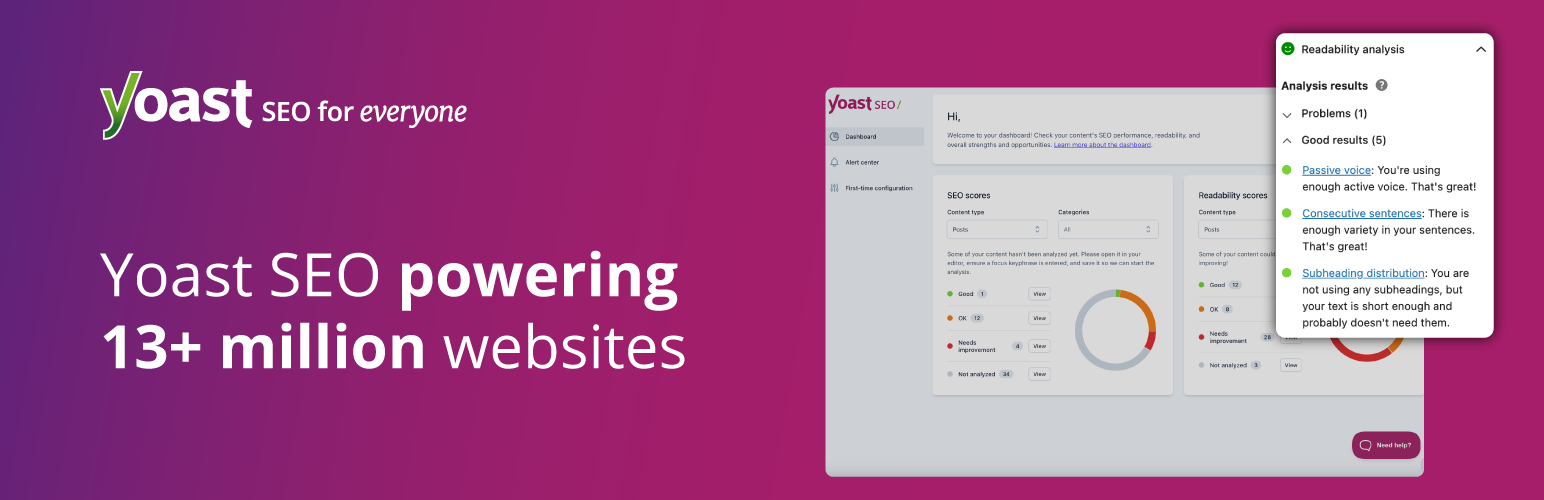
If you are just starting out or if your main goal is to write better articles, Yoast SEO is still the safest bet.
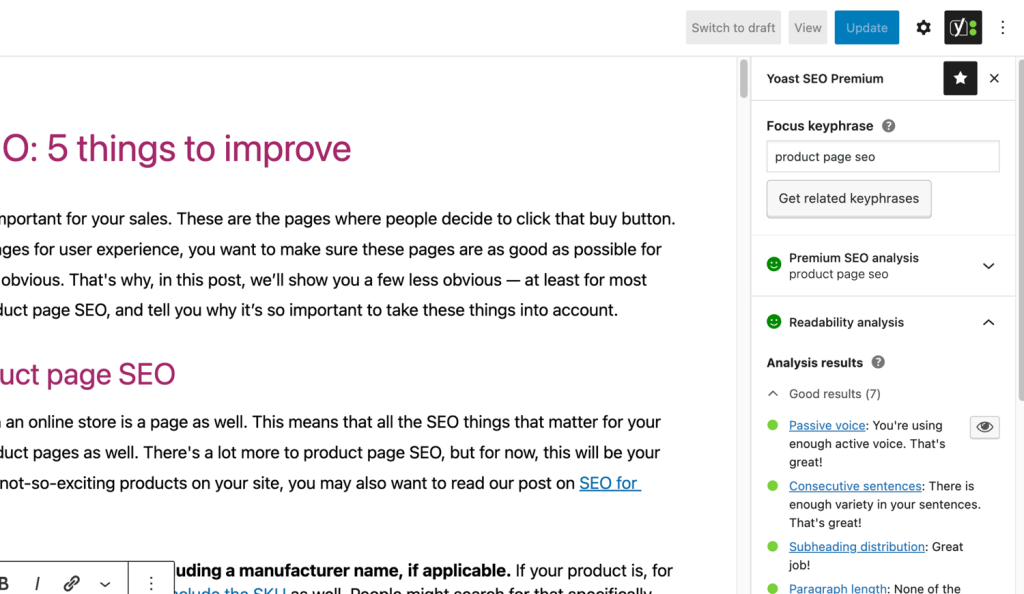
It’s famous for its “traffic light” system (red, orange, and green dots) that tell you exactly how you’re doing.
I’ve used Yoast on dozens of sites over the years, and it remains the most intuitive tool for non-techies.
It doesn’t just focus on keywords; it focuses on how easy your content is for a human to read. It checks for things like passive voice and sentence length, which are actually becoming more important for AI-driven search.
One of the biggest grinds in SEO is writing unique meta descriptions for every single page. In 2026, Yoast has streamlined this with their AI Generate tool.
It uses your actual content to draft several options for your SEO titles and descriptions.
I tried it on a series of product pages recently, and it saved me hours. Instead of staring at a blank box, you just pick the best one and tweak it
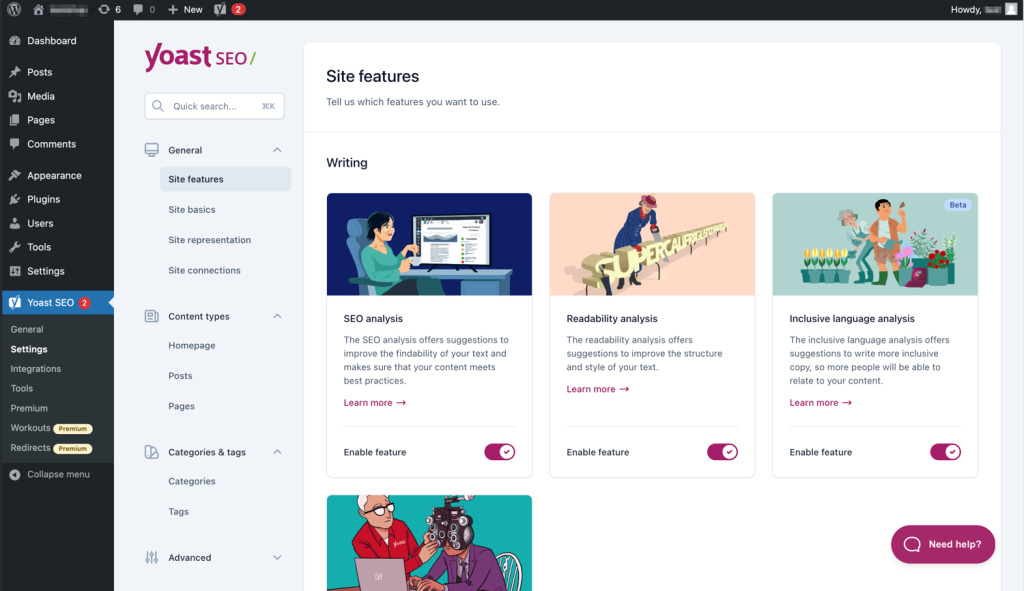
Another new feature I love is the AI Summarize block. You can drop it at the top of your post, and it automatically creates a bulleted list of the most important points.
| Pros | Cons |
| The best readability analysis in the industry. It makes you a better writer. | It is “heavier” than some other options. In our tests, it used about 1.2 MB of memory per page load, which is double what Rank Math uses. |
| Excellent onboarding for people who have never done SEO before. |
3. AIOSEO: Best For Local & Business SEO
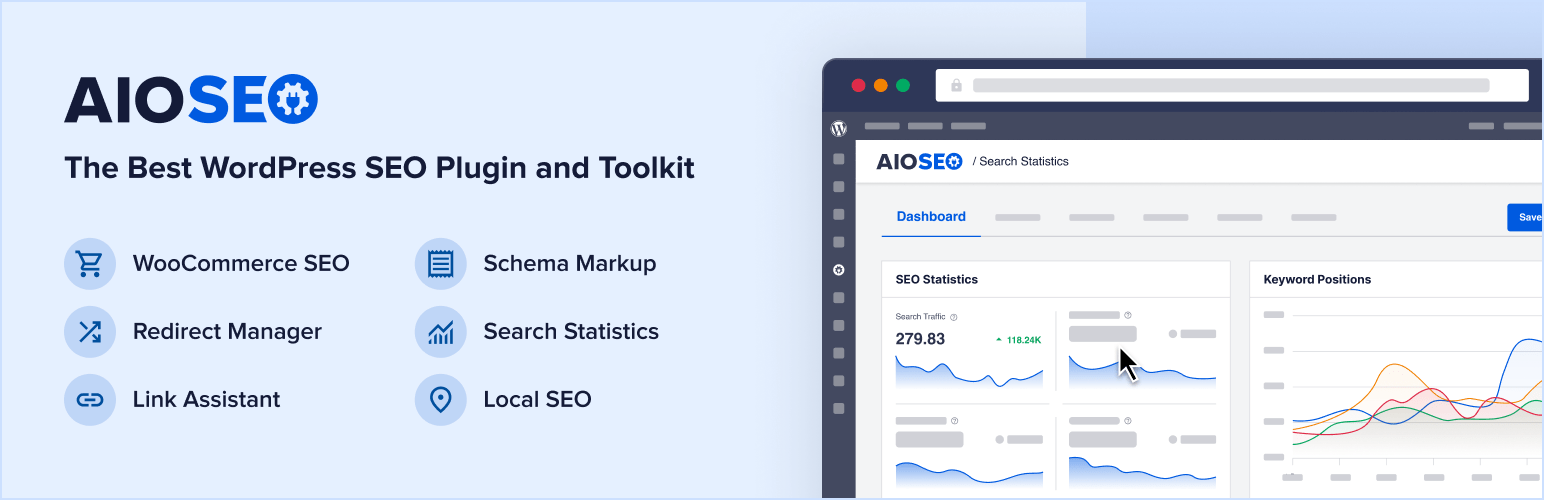
AIOSEO is likely the best tool for your specific needs. While other plugins try to do everything for everyone, AIOSEO has carved out a niche by making “Local SEO” incredibly easy.
It provides real-time SEO suggestions while you write. Its AI Writing Assistant helps improve titles and meta descriptions as you write.
It also offers sitemaps, social media previews, and WooCommerce tools to boost your traffic.
You can download the free version from the WordPress plugin. For complete features, the plans started from $20.83/month.
| Pros | Cons |
| Best-in-class Local SEO features and Google Maps integration | Some features like Link Assistant are not available |
| Very clear, jargon-free SEO audit reports. |
4. The SEO Framework:
If you are a developer or a site owner who hates seeing ads and “upsell” banners in your dashboard, The SEO Framework (TSF) is a breath of fresh air.
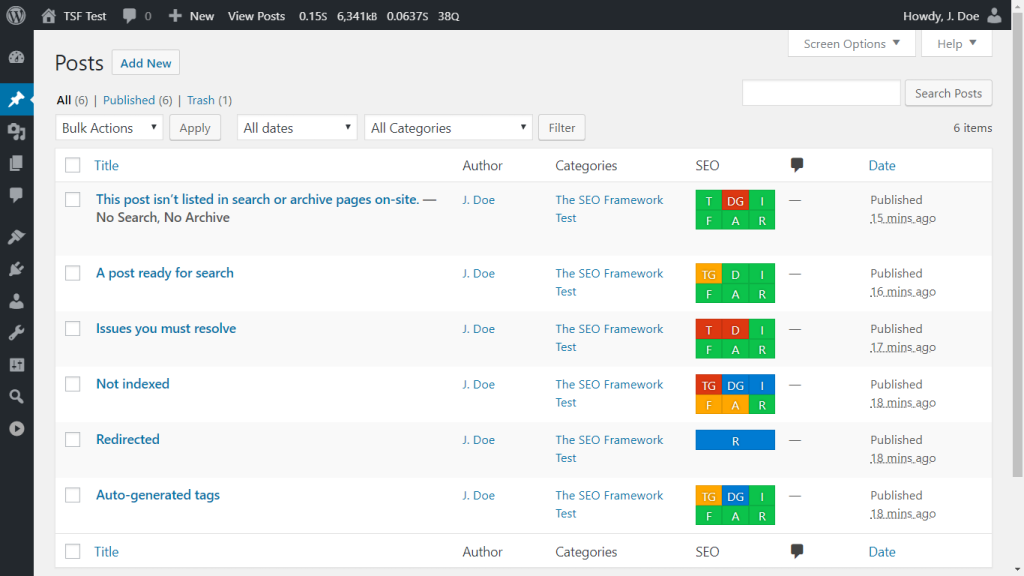
It is built with a simple philosophy: SEO should be automated and invisible.
Unlike the other plugins on this list, TSF is unbranded. It doesn’t put “SEO score” boxes all over your editor.
Instead, it works quietly in the background to handle your technical metadata. It is the only plugin I’ve found that feels like part of the WordPress core rather than a heavy add-on.
We ran a side-by-side test between a site running Yoast and one running TSF.
The results were clear. The SEO Framework showed a 500ms improvement in Time to First Byte (TTFB).
| Pros | Cons |
| Zero ads and zero tracking scripts. | It does not have a “readability” or “keyword density” analyzer. You need to know how to write well on your own. |
| The fastest performance on the market. It adds almost no load to your database |
5. SEOPress – The Agency & Developer Favorite
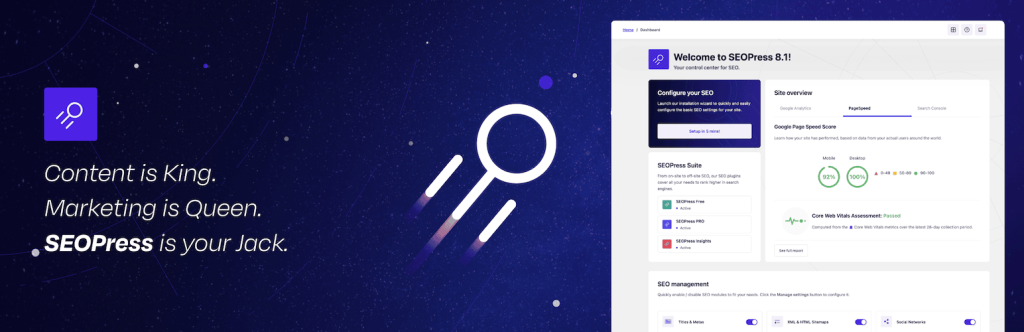
If you are an agency owner or a freelancer, SEOPress is likely the most practical tool on this list. It is built to be “invisible” to your clients while giving you professional-grade controls under the hood.
The biggest thing I noticed when using SEOPress is the lack of “nagging.”
Most SEO plugins constantly show banners or ads for their paid versions.
SEOPress is completely clean. Even the free version has zero ads in the WordPress dashboard, which makes your site look much more professional if a client is logging in.
It also offers white-label advantage. You can completely remove the “SEOPress” name and logo from the dashboard and replace it with your own branding.
Like Rank Math and Yoast, SEOPress has added AI capabilities in 2026. You can connect your own OpenAI or DeepSeek API key to generate titles, meta descriptions, and image “Alt” text in bulk.
| Pros | Cons |
| Best value for agencies: The Pro version covers unlimited sites for a very reasonable price. | No “readability” traffic lights. It assumes you already know how to write good content. |
| No ads or “footprints” in the source code. | The interface is more technical and doesn’t “hold your hand” as much as Yoast does. |
Performance Benchmarks:
We monitored the memory usage of each plugin on a clean WordPress installation. Here is how much “weight” each one adds to your server every time a page is loaded.
| Plugin Name | Memory Usage (Approx.) | Impact Level |
| The SEO Framework | ~120 KB | Non-existent |
| SEOPress | ~250 KB | Very Low |
| Rank Math | ~600 KB | Moderate |
| AIOSEO | ~850 KB | Noticeable |
| Yoast SEO | ~1.2 MB+ | Significant |
Switching SEO Plugins Safely:
Moving from one SEO plugin to another used to be a nightmare that often resulted in lost titles and broken descriptions.
In 2026, the process is much cleaner, but you still need a solid plan to avoid a ranking “dip.”
Phase 1: Preparation (The Safety Net)
Before you touch a single setting, you must have a way to go back if things go sideways.
- Run a Full Backup: Use a reliable tool like BlogVault, UpdraftPlus, or your host’s built-in backup. Ensure you backup both your database (where your SEO titles live) and your files.
- Benchmark Your Current Stats: Take a screenshot of your current Google Search Console performance and your Core Web Vitals scores. You’ll need these to verify that the new plugin isn’t hurting your speed or traffic.
Phase 2: The Import Wizard
Most modern plugins like Rank Math and AIOSEO have “Setup Wizards” that handle the heavy lifting.
- Install the New Plugin: Search for your new plugin in the WordPress repository and click “Install” (but do not deactivate the old one yet).
- Launch the Wizard: The plugin will usually detect your existing SEO tool (like Yoast).
- The “Scrape” Process: Select the option to Import Settings and Data. This will pull your existing meta titles, descriptions, and 301 redirects into the new system.
- Deactivate the Old Plugin: Once the wizard confirms the import is 100% complete, it is safe to deactivate your old plugin.
Expert Note: If you are moving to Rank Math, use their “Yoast Block Converter” tool. It converts old Yoast FAQ and How-To blocks into Rank Math blocks so your schema markup doesn’t break.
Phase 3: Post-Migration Cleanup
Once the new plugin is live, don’t just walk away. You need to tidy up the database.
- Delete Old Tables: Many plugins leave “ghost data” in your database. Look for a “Clean Up” or “Remove Data” button in your new plugin’s advanced settings to wipe the old Yoast or AIOSEO entries.
- Check for 404 Errors: Use the new plugin’s 404 monitor to make sure no important URLs were lost during the move.
- Resubmit Your Sitemap: Go to Google Search Console and submit the new sitemap URL (usually sitemap_index.xml). This tells Google you’ve updated your structure.
This video walkthrough shows the exact buttons to click during the Rank Math migration wizard, making the process much less intimidating for beginners.
FAQs:
Can I use Yoast SEO for free?
Yes, Yoast SEO also offers a free version.
Is Yoast SEO better than RankMath?
Although Yoast SEO has more active installations, RankMath offers better features, even in its free version.
Which SEO plugins are best for WordPress?
Popular top plugins include Yoast SEO, Rank Math, AIOSEO, and SEOPress.
How do SEO plugins help with SEO?
Most SEO optimization plugins offer key features like managing metadata, generating sitemaps, optimizing content, and adding structured data.
Is RankMath good for SEO?
Yes, Rank Math is a great choice, as it offers keyword tracking, content analysis, schema markup, XML sitemaps, and more.
Explore More: